Description
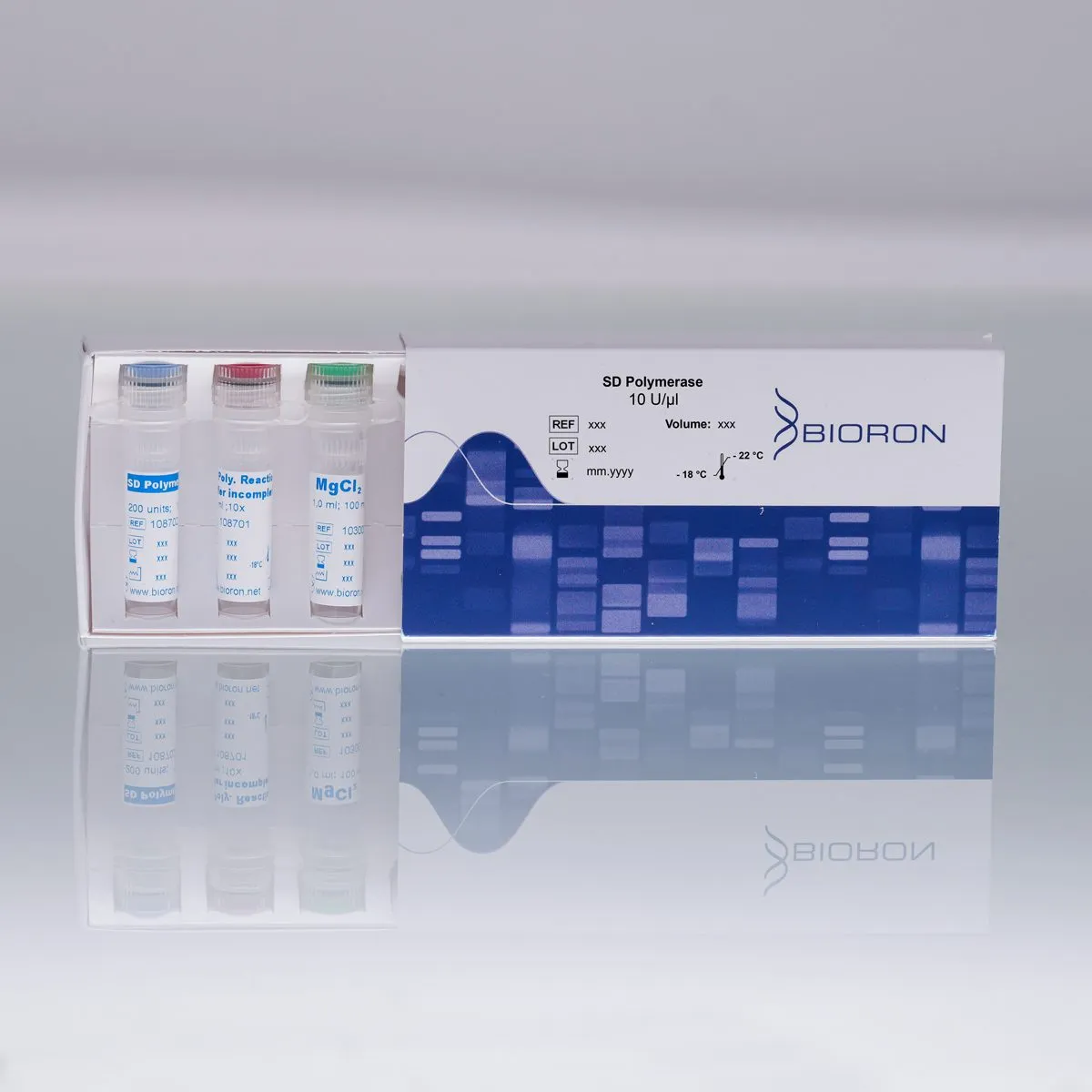
SD Polymerase, 10 U/µl, is a novel artificial thermostable DNA polymerase engineered for strong strand displacement activity and exceptional performance in both PCR and isothermal amplification systems. The enzyme is stable up to 93 °C, enabling unique workflow flexibility that combines high-temperature PCR cycling with isothermal reaction formats such as LAMP.
In contrast to natural strand displacement enzymes such as Phi29 or Bst polymerase, SD Polymerase retains full activity at elevated temperatures. This allows initial heat denaturation steps to improve template accessibility and reaction specificity.
The enzyme possesses both 5’→3’ polymerase activity and 5’→3’ strand displacement activity, while lacking any exonuclease activity. It generates PCR products with 3’-A overhangs, making it compatible with standard TA cloning workflows.
SD Polymerase is highly efficient for amplification of short (from 100 bp) to very long DNA fragments up to 20–30 kb from both plasmid and complex genomic DNA templates. It demonstrates superior yield, speed, and sensitivity compared to conventional Taq polymerase and is capable of amplifying even single-copy targets with high efficiency.
A key application is Polymerase Chain Displacement Reaction (PCDR), where SD Polymerase combines PCR and strand displacement mechanisms to achieve significantly increased sensitivity and amplification efficiency compared to standard PCR.
The enzyme is also highly suitable for LAMP and other isothermal amplification methods, with optimal performance between 62–68 °C. An initial denaturation step at 92 °C can further enhance reaction specificity in certain applications.
SD Polymerase is particularly effective for difficult templates, including GC-rich regions and low-abundance targets, and is widely used in standard PCR, isothermal amplification, library preparation, whole genome amplification (WGA), and molecular diagnostics.
The enzyme is supplied with an optimized reaction buffer system and MgCl₂ solution (recommended final concentration 3–3.5 mM) for flexible assay optimization. A HotStart variant and a high-concentration version (50 U/µl) are also available.